Sunday, May 19, 2013

Woodcock, Teal, Turtles and Other Recent Sightings


The American Woodcock calls on the ground before his aerial flight display
 The American Woodcocks began courtship display flights in late March and they have continued right up until this week. Over the last decade the breeding grounds at the nature preserve have expanded for this species as fields have grown in and become brushy meadow and young forest habitat. The beavers have done their part to keep the Woodcocks' favorite field at a stage where it remains viable breeding habitat; as they continue to harvest  larger pioneer saplings, they keep much of the field in a perpetual brushy state, which the woodcocks can utilize.
As he calls on the ground, the Woodcock turns in a circle in order to address the entire meadow
The "chunky" American Woodcock is probably our most bizarre looking shorebird
At dusk the Woodcocks begin to assemble on their staging grounds. Loud nasal "peent" calls begin to emanate from the meadow - and that's usually the first indication that the birds are there, that is unless you're lucky enough to see them fly in. The calls from a single individual vary in volume; this is because the male is turning to face different directions as he calls. After a while, as he continues to turn in place, he begins to flash his tail feathers - revealing white under-tail spots that are normally invisible on the resting bird. When it's dark enough the male launches from the ground, quickly gains altitude and begins to describe a wide circle over the meadow. In the quickly fading light, it is usually possible to pick out his silhouette against the sky. His relatively slow fluttering flight reminds me of a fat bat, or even a huge moth. Often enough, you won't be able to see him - you'll only hear the twittering sound that is produced by his outer primary wing feathers as moving air makes them vibrate.
Pictured against a darkening sky, the Woodcock may fly as high as 300 yards
At the crescendo of his flight display the male woodcock begins banking from side to side, and this creates a weaving or zig-zagging flight pattern. At this point he begins to descend and the twittering wing sound is augmented by some repetitive piping vocalizations. The flight display ends with the bird’s rapid descent to the ground and then, almost immediately, he resumes giving nasal “peent” calls. With any luck, a female woodcock had been observing this spectacle and was duly impressed.
Sitting on her nest at the base of an Aspen tree, the female woodcock relies on her camouflage 
Large eyes  placed high on her head allow the woodcock to see directly behind her
Apparently at least one female was captivated by the male's performance, because a week ago I found a female woodcock sitting on a nest in a nearby meadow. The woodcock’s excellent camouflage makes them just about impossible to pick out against the surrounding vegetation. The birds’ relatively large eggs are brownish and heavily blotched with dark spots so they too blend in with their surroundings, which is an important safeguard for whenever the female has to leave the nest in order to feed.
A Pair of Blue-winged Teal - the male shows a crescent moon on the side of his face

At one of our beaver ponds it looked for a little while like pair of Blue-winged Teal were going to nest. They spent over a week at the location and courtship and mating behavior was witnessed. The Blue-winged Teal is a very small duck – about half the size of a Mallard. They do nest in the region but they are by no means common here. The shoulder portion of the leading edge of their wings are light blue and that gives the species its common name. The Blue-winged Teal is sometimes a long distance migrant, wintering as far south as South America.
This Painted Turtle laid her eggs in a chicken coop!
2 painted Turtles bask in the morning sun
Lately turtles have been very much in evidence at the nature preserve. In a few cases, some female Painted Turtles have been traveling far away from their wetland habitat in order to find suitable places to lay their eggs. However, sometimes these turtles find the most inappropriate places to lay. At her own home, one of Spring Farm CARES’ employees found a Painted Turtle in the midst of laying its eggs in a hole that it excavated inside of a chicken coop. It’s likely that the resident chicken will be surprised when baby turtles start to emerge from the ground. The mother turtle was brought to the preserve for release. She joins a healthy population of Paints and other turtles at our turtle/frog pond.
Red Baneberry
Woodland Wildflowers continue to bloom around the nature preserve, though the ongoing dry weather and near constant browsing by deer have presented a great challenge to most of them.
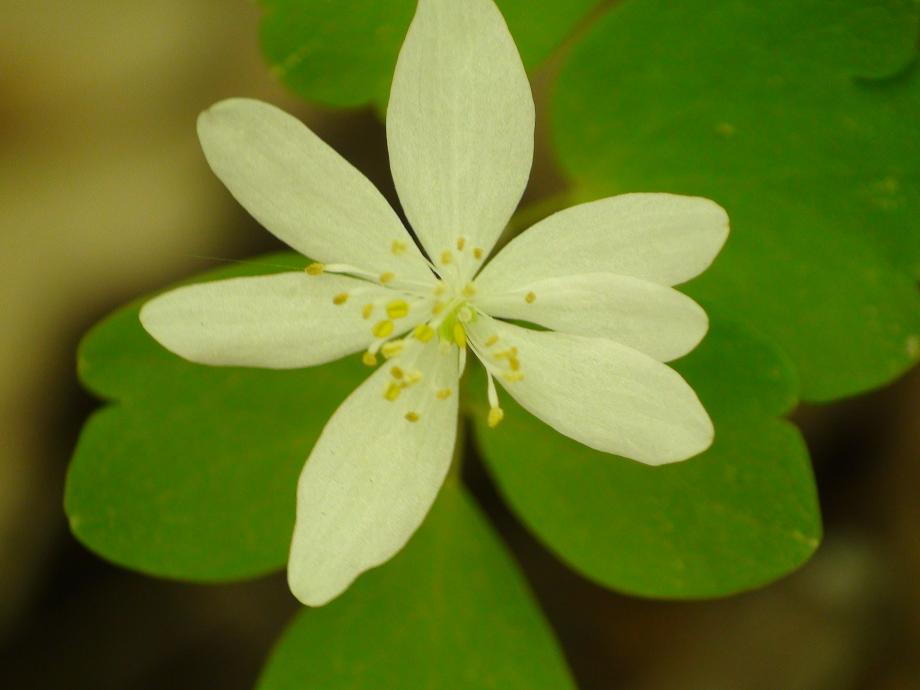
Rue Anemone
Long-spurred Violet
Canada Violet
Marsh Marigold
False Bishop's Cap
Jack-in-the-Pulpit

Saturday, May 11, 2013

Blueberry Beaver Will be Greatly Missed

Blueberry 2010 - 2013
Our Beaver Colony lost one of its members this week. Blueberry was born in late summer of 2010, the first offspring of our resident pair at the time, Julia and May Apple. It was an unusual time of year for a beaver to be born, since most beavers have their kits in the early spring. The fact that he was an only kit was not particularly unusual since this was the first time that his parents had reproduced.
Blueberry in 2011
Blueberry (left) with his father , May Apple (right) enjoying some apples in 2011
Blueberry wasn't an only beaver for long, and in the spring of 2011 his parents supplied him with 4 new siblings, which he seemed more than happy to help care for. One of the kits would incessantly badger him for apple pieces or any other tasty morsel its older brother might be enjoying. That particular kit was dubbed “Badger Beaver” and later became Blueberry’s closest friend in the colony. Blueberry and Badger, along with their father, May Apple (the master builder) did the lion’s share of the maintenance on all of the colony’s dams and lodges.
 
Blueberry having some poplar twigs
Blueberry (left) with Badger (right) in the summer of 2011
In the spring of 2012, when the main pond’s water level had been substantially increased, emergency work was needed on the lodge and the 3 worker beavers toiled around the clock until the job was done. They piled up branch after branch on top of the lodge – greatly increasing its height, while simultaneously, from the inside, chewed out a new ceiling. They also raised the level of the living chamber’s floor. Interestingly, Julia and her latest batch of kits were inside the lodge during the entire reconstruction process.
 
May Apple dragging a branch onto the lodge in 2012
Blueberry coming down after working on the roof of the lodge
Blueberry was a very friendly beaver and I had many encounters with him during his too short life. He would often come up onto shore right near me and collect grass or groom himself. Sometimes he would causally pass by me on a foot trail – headed out into the sapling grove to do some logging for dinner.
Blueberry collecting grass probably to use as bedding inside the lodge
Blueberry loved apples
The most famous anecdote about Blueberry had to do with a one beaver protest that he staged against his father’s selection of the family's “groceries”. He was about a year old at this time and May Apple was still providing him with most of his food. Pussy Willow is the most common beaver food plant at the nature preserve and so that's what May Apple usually came back with. The trouble was that Blueberry was tired of willow and what he really wanted his father to bring back was Quaking Aspen. So to protest, he began taking the freshly cut willow saplings – one by one, and pushing them over the dam. Hilariously, after he finished shoving the last nemesis branch over and out of the pond, May Apple returned with a king-sized willow sapling. Why don’t you just help yourself, Blueberry? There’s plenty more where that came from.
By 2012, Blueberry got over his dislike of willow and collected loads of it for the winter food supply
After the big dam collapse in June of 2012, and May Apple and 3 of badger’s brood mates disappeared – and were presumably killed, it was Blueberry and Badger that managed to pull things together and recreate a new place for the remainder of the colony to live. Blueberry was instrumental in fixing the dam at Secret Pond and creating a new lodge there. Now in the role of main provider for his mother and for 4 brand new kits, Blueberry got over his hang up with willow in a big hurry.
Badger and Blueberry take a short break from emergency dam building at Secret Pond
Blueberry works on the dam at Secret Pond
Last fall, the bulk of the food collecting for the winter food cache was done by Blueberry, but Julia and Badger also helped out. Their search for food led them further away from the home ponds than our colony had ever gone before. They found a remote grove of aspen and exploited the trees will skill and efficiency. The food cache, which was primarily assembled by Blueberry, grew as large as any that his father or grandfather had created before him.
A Quaking Aspen cut down by Blueberry
Blueberry drags the Aspen tree back to the pond
Blueberry seems to have died from injuries sustained from being caught in a leghold trap. Most likely this happened while he was looking for new territory somewhere off of the preserve’s boundaries. It is surmised that he either had freed himself from the trap or was released by the trapper. Beaver trapping season ended in our region on April 7, and so any beaver caught after that date would be mandated released or dispatched. Since leghold traps are not typically the trap of choice employed for trapping beaver, it’s likely that beaver was not the target animal in this case.
Blueberry with one of the new kits in 2011
Blueberry evidently took a long time to die. He managed to get himself back to his home pond where he died from a massive infection in his crushed right leg.
Blueberry with a new kit from 2012
Trapping is still a thriving “sport” in New York State – promoted and “managed” by the NYS DEC. Traps are set in wild areas throughout the State where they indiscriminately kill and maim many thousands of wild animals every year. Rarely encountered animals like Pine Marten, Otter, Fisher and Bobcat are included on the list of animals that can be legally trapped in New York. Gray Fox, Red, Fox, Coyote, Ermine, Mink, Opossum, Raccoon, Muskrat and Beaver are among the typical animals targeted by this barbaric practice. In the case of most of these animals, there are no bag limits imposed on trappers – so come on kids, trap as many as you want. And yes,the State does actively encourage kids to get involved.
Blueberry with a new kit from 2012
Remember never to purchase real fur! And tell your State elected officials that trapping in all of its forms should be banned permanently.
Goodbye Blueberry

Sunday, May 5, 2013

Brown Thrashers and Rufous-sided Towhees - Also Some New Blooms in the Old Forest

A newly arrived Brown Thrasher sings from a tree top
The male Rufous-sided Towhee arrived  over a week ago
Almost every day brings at least one newly arriving migrant to the nature preserve. Today a half dozen different warbler types were seen in our old woods. Last week among the new comers were the Brown Thrasher and the Rufous-sided Towhee. These are 2 unrelated species that look very different but have very similar lifestyles and breeding habitat requirements.
The thrasher is one of the Mimic Thrushes - they imitate the songs and calls of other birds
The towhee was once called "Ground Robin" for their reddish flanks and ground feeding habits
It has been tough going for the thrasher and the towhee in recent decades as their preferred habitat (brushy meadow) disappears throughout much of their range. By its very nature, over-grown meadow habitat is only temporary; it’s a habitat that is in the process of transitioning from meadow into forest - and so the end result of this natural succession process is to exclude both species from breeding there. So in order to keep the birds happy, it is necessary that there are always new farm fields and pastureland being abandoned and allowed to grow in.
2 young sibling thrashers pal around together in mid summer
An adult thrasher defending the nest area and giving loud "smack" calls
With habitat requirements like these, a valid question would be to ask whether the towhee or the thrasher could have been all that common before Europeans cleared the original forests of Eastern North America. Before that time these birds, and many others that share similar habitat requirements, would've been reliant on other disturbance factors in the environment – factors such as forest fires, blow-downs and of course, beavers. All of these factors would serve to clear land of its forest cover and thereby allow the natural field succession process to commence.
A female towhee (with brown head) has a beak full of caterpillars meant for its hungry brood
An immature towhee seen in mid summer - note the nondescript plumage
It is likely that Native Americans also played a large role in providing the thrasher and the towhee with habitat – as they regularly utilized fire and other techniques for clearing land. Natural forest edges occurring around wetlands and some geological features would've also provided a certain amount of habitat for these birds, but again, not enough to make either species very common.
 
Thrashers feed on insects, fruit and will come to bird feeders for peanuts
This immature thrasher lacks the yellow eye color of the adult
I think that it is doubtful that pre-colonial disturbance factors would've provided enough habitat to make thrashers andtowhee very common in that remote past - at least in the Northeast, but that would be impossible to confirm since no detailed records regarding songbird populations were kept at that time. It is however pretty likely that we are heading back to a population density that is more in keeping with what it was in the pre-colonial period. 
The towhee can be a common visitor to bird feeders
At the Nature Preserve, our own habitat for towhee and thrasher is in very good shape and it’s likely to remain that way for some time even with little intervention from us. This is because of the incredibly slow rate in which some of our old farm fields are reverting back to forest. Erosion and 2 centuries of agriculture rendered some of these hillside fields inhospitable for even the heartiest pioneer trees and shrubs; the result of this will be to extend the these fields’ “brushy period” for another couple of decades and thus keep the land in suitable condition for these 2 wonderful resident songbird species.
 
Toad Shade Trillium
And extended period of warmer than average temperatures has accelerated the leafing out of the forest and the blooming of the woodland wildflowers. Many flowers have opened early and have had shorter than normal bloom periods. 
Red Trillium
A rare yellow form of the Red Trillium - now protected in a shade garden
Wild Ginger grows as a spare ground cover in one of the woodland gardens
Twin Leaf - enjoys a particularly short blooming period
False Rue Anemone - one of our rarest forest flowers
Cut-leaf Toothwort
Perfoliate Bellwort
Dutchman's Breeches
Squirrel Corn